
Indigent Hardship Petition Standard Across States
Get My Reinstatement QuoteHow State Indigent Standards Differ From Federal Poverty Guidelines
Most states set indigent hardship thresholds at 125% to 200% of the federal poverty guideline, but that income ceiling is only the first filter. A single adult earning $18,000 annually would qualify under the income test in most states, but would be disqualified if they own a vehicle worth more than $3,000 in states like Michigan or Virginia that apply asset caps.
The federal poverty guideline for a single-person household currently sits at approximately $15,060 annually. States that use 150% of this figure set the threshold near $22,590. States using 200% set it near $30,120. These thresholds adjust annually with federal guidelines, but state statutes often lag by one or two years—meaning the published threshold on a state DMV website may reference outdated figures.
Income alone rarely determines eligibility. Most states require a complete financial disclosure that includes bank account balances, vehicle equity, real estate holdings, and retirement accounts. Drivers who meet the income test but hold assets above the state's cap will be denied. The asset test is where most petitions fail, not the income calculation.

States That Allow Hardship Petitions for Unpaid Traffic Debt
Michigan, Minnesota, Oklahoma, Texas, Virginia, and Wisconsin explicitly permit hardship license applications from drivers whose suspension stems from unpaid traffic tickets or court fines. These six states treat fines-cause suspensions as eligible hardship categories, but each applies different income and asset thresholds.
Texas sets its indigent standard at 125% of federal poverty guidelines and allows judges discretion on asset limits. A driver earning $1,600 monthly would meet the income test, but a judge may deny the petition if the driver owns a vehicle worth $8,000 or more. Oklahoma uses a similar income threshold but applies a stricter vehicle equity cap of $5,000.
States outside this list typically do not offer hardship driving during the debt-resolution period. California reformed its practice in 2017 under Vehicle Code 13365, eliminating most fines-cause suspensions entirely rather than expanding hardship access. New York, Florida, and Illinois require full debt payment before reinstatement—no hardship pathway exists for unpaid-fines drivers in those states.

Asset Disclosure Requirements That Block Most Petitions
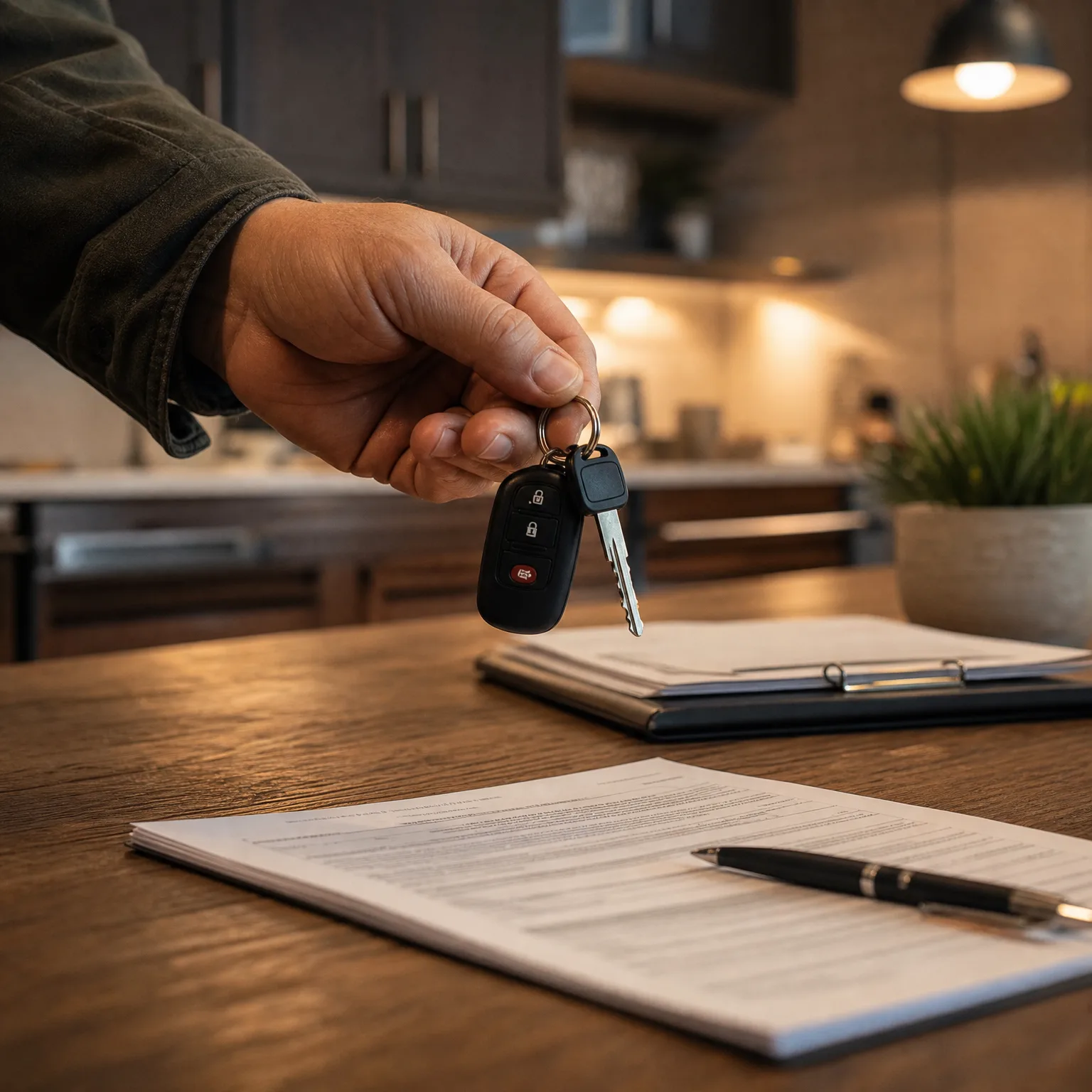
Income thresholds get published on DMV websites. Asset caps rarely do. Michigan requires petitioners to disclose all vehicles owned, equity in real property, and cash reserves exceeding $500. A driver earning $1,400 monthly meets the income test, but if they own a home with $20,000 in equity, the petition will be denied.
Virginia applies a total asset cap of $10,000 excluding the primary residence. Bank accounts, vehicle equity, investment accounts, and retirement accounts all count toward this ceiling. Wisconsin uses a sliding scale: drivers with zero dependents face a $2,500 asset cap; drivers with two dependents may hold up to $5,000 in total assets.
The asset disclosure form typically asks for: all checking and savings account balances as of the filing date, the fair market value of all vehicles owned and the outstanding loan balance on each, real estate holdings and mortgage balances, retirement account balances including 401(k) and IRA accounts, and any other holdings exceeding $500 in value. Courts verify these disclosures against public records. Drivers who underreport assets face perjury charges and automatic petition denial.
State-by-State Income and Asset Thresholds
Texas applies 125% of federal poverty guidelines as the income ceiling. A single adult qualifies if annual income falls below approximately $18,825. Asset disclosure is required but no hard cap is published—judges apply discretion. Drivers with vehicle equity exceeding $7,000 typically face denial.
Michigan sets the income threshold at 150% of federal poverty guidelines, approximately $22,590 for a single adult. Asset cap is $2,500 excluding one vehicle and the primary residence. Bank account balances above $500 trigger automatic disqualification regardless of income.
Minnesota uses 200% of federal poverty guidelines, approximately $30,120 for a single adult. Asset disclosure is required but the cap is applied situationally—drivers with retirement accounts exceeding $15,000 typically do not qualify, even if current income meets the threshold.
Oklahoma and Wisconsin both apply 150% thresholds with vehicle equity caps near $5,000. Virginia uses a 125% threshold with a total asset cap of $10,000. Each state publishes the income figure prominently but buries the asset test in the petition instructions or leaves it to judicial discretion.

Clear the Suspension and Get Covered Again
Get My Reinstatement Quote
How Courts Verify Income and Asset Claims
Courts request pay stubs covering the most recent 60 to 90 days, bank statements for all accounts held during the previous three months, vehicle titles or registration showing fair market value and lien status, and tax returns for the most recent filing year. Some states require employer verification on company letterhead confirming current hourly wage or salary.
Drivers who are self-employed or work cash jobs face the highest denial rates. Courts expect Schedule C filings, 1099 forms, or invoices showing business income. A driver who reports $1,200 monthly income but filed a tax return showing $28,000 in gross receipts the prior year will be denied for inconsistency.
Asset verification pulls from public records: county assessor databases for real estate holdings, DMV title records for vehicle ownership, and credit bureau reports showing liabilities. A driver who omits a second vehicle registered in their name will be flagged during the verification process. Most states treat intentional omissions as fraud and bar the driver from reapplying for 12 months.

What to Do If Your Petition Is Denied for Asset Excess
Denial based on asset caps leaves three options. The first: liquidate assets to fall below the threshold, then refile. A driver with $4,000 in a savings account in Michigan would need to spend down or transfer $3,500 to qualify under the $500 cap. Courts verify account balances at the time of the hearing, not the filing date—depleting the account two weeks before the hearing satisfies the requirement.
The second option: pursue a payment plan with the court that issued the underlying fines. Michigan, Minnesota, and Texas allow monthly installment plans for drivers who do not qualify for indigent status. Once the payment plan is active, the driver can request a restricted license tied to compliance with the plan. Missing a payment triggers immediate revocation.
The third option: pay the debt in full and request standard reinstatement. This is often faster than the hardship petition process. Drivers who own assets above the cap typically have access to those assets—selling a second vehicle or drawing from a savings account to clear the debt eliminates the suspension within 7 to 14 days in most states.
Post-Reinstatement Insurance Requirements
Most unpaid-fines suspensions do not trigger SR-22 filing requirements. If your suspension was administrative and tied only to unpaid traffic tickets or court fines, you will need proof of minimum liability coverage to reinstate, but not an SR-22 certificate.
States typically require proof of insurance at the reinstatement counter. This can be an insurance ID card showing current coverage or a certificate of financial responsibility issued by your carrier. Minimum liability limits vary by state—most require at least $25,000 per person and $50,000 per accident for bodily injury, plus $25,000 for property damage.
If you drove on a suspended license during the debt-suspension period, SR-22 may be required as a consequence of the secondary offense. Driving on suspended is a separate violation that carries its own penalties and often triggers a filing requirement even when the original suspension did not. Verify your reinstatement conditions with your state DMV before purchasing coverage.
Frequently Asked Questions
Does federal poverty level determine my state's hardship petition eligibility?
No. States use federal poverty guidelines as a baseline but apply their own multipliers—typically 125% to 200%—and add asset disclosure requirements that disqualify many drivers who meet the income test. Each state sets its own rules.
What counts as an asset when filing an indigent hardship petition?
Most states count vehicle equity, bank account balances, real estate holdings, retirement accounts, and any cash reserves exceeding $500. The primary residence is usually excluded, but second vehicles and investment accounts count toward the asset cap.
Can I qualify for a hardship petition if I own a car worth $6,000?
It depends on your state's asset cap and whether you have an outstanding loan. States like Michigan and Oklahoma apply vehicle equity caps around $5,000. If you owe $2,000 on the car, your equity is $4,000 and you would qualify. If you own it outright, you would exceed the cap.
What happens if I leave assets off my hardship petition form?
Courts verify disclosures against DMV title records, county assessor databases, and credit reports. Omitting an asset is treated as fraud in most states and results in automatic denial. You may be barred from reapplying for 12 months and could face perjury charges.
Do I need SR-22 insurance after reinstating from an unpaid-fines suspension?
Typically no. Unpaid-fines suspensions are administrative and do not usually trigger SR-22 filing requirements. You will need proof of minimum liability coverage, but not an SR-22 certificate. If you drove on a suspended license during the suspension period, SR-22 may be required for that secondary offense.
What do I do if my hardship petition is denied because my assets are too high?
You can liquidate assets to fall below the cap and refile, negotiate a payment plan with the court and request a restricted license tied to plan compliance, or pay the debt in full and reinstate without the hardship process. Most drivers with assets above the cap choose the third option because it's faster.
Related Articles

Michigan Indigent Hardship Petition: Who Qualifies
5/18/2026

Indigent Petition Filing: What Courts Require
5/18/2026

Filing Indigent Hardship Petition for Traffic Fines
5/18/2026

Indigent Petition Approval Rates: What Courts Approve
5/18/2026

Indigent Petition Denied: Appeal & Payment Options
5/18/2026
Indigent Petition Fees by State | Unpaid Tickets
5/18/2026