
Pennsylvania Act 35 Unpaid Fines: Reinstatement Without Hardship
Get My Reinstatement QuotePennsylvania's Act 35 Suspension Locks Out Hardship Relief
Pennsylvania suspended your license because you owe traffic fines across one or more courts. The suspension notice arrived from PennDOT's Bureau of Driver Licensing, triggered by court-reported debt under Act 35 of 2016. You checked the Occupational Limited License (OLL) program hoping to drive for work during debt resolution. Pennsylvania courts do not grant OLL petitions for unpaid-fines suspensions.
The OLL exists only for DUI and certain criminal convictions under 75 Pa.C.S. § 1553. Drivers suspended for administrative reasons—unpaid tickets, insurance lapses, point accumulations—have no hardship pathway. Your suspension remains in full effect until every underlying court obligation is satisfied and PennDOT processes reinstatement.
This creates a procedural lock: no income from driving to work means slower debt paydown, which extends the suspension, which blocks access to employment requiring a license. The only legal path forward is debt resolution followed by reinstatement. Pennsylvania gives no provisional driving during the debt-settlement period for fines-cause suspensions.
How Act 35 Debt Suspension Works in Pennsylvania
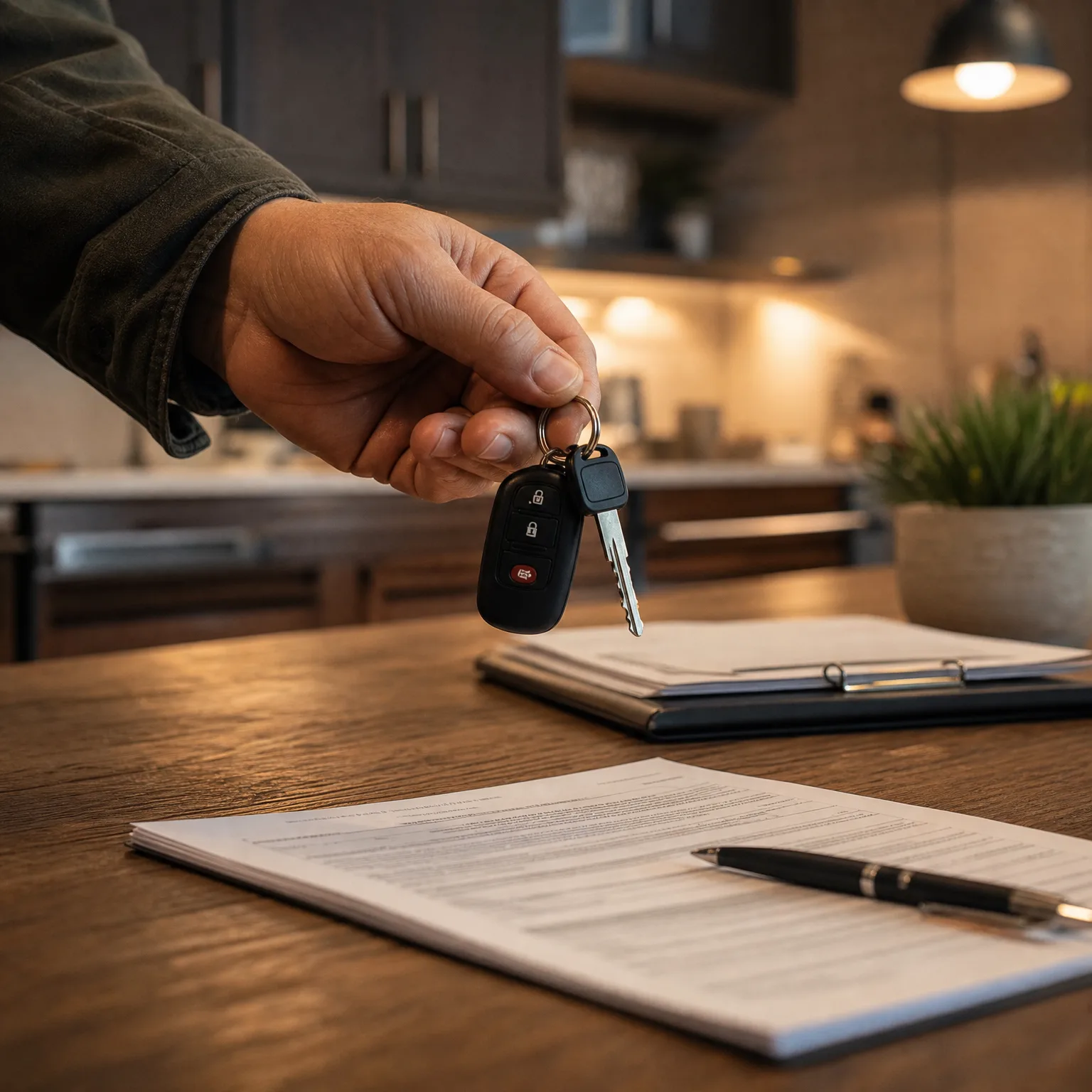
Act 35 authorizes Pennsylvania courts to report unpaid traffic fines, costs, and restitution to PennDOT when a defendant defaults on payment or a payment plan. PennDOT receives the debt report electronically and issues an indefinite suspension. The suspension does not expire after a fixed term—it remains active until the court notifies PennDOT that the debt is satisfied.
Most drivers discover the suspension when pulled over or when attempting to renew their license. PennDOT's online restoration tool lists every court holding an unpaid obligation. Drivers with tickets in multiple counties see multiple court entries, each requiring separate resolution. A $250 speeding ticket in Philadelphia, a $180 running-a-red-light fine in Allegheny County, and a $95 court cost in Montgomery County all generate independent suspension entries.
Each court operates its own payment plan system. Some allow online payment arrangements; others require in-person appearances. The debt total often surprises drivers because collection fees, late penalties, and court costs compound the original fine. A ticket issued at $150 may carry a current balance of $275 after collection surcharges.

Total Debt Identification Across All Pennsylvania Courts
PennDOT's driver record portal shows which courts reported unpaid obligations, but it does not display exact amounts owed. Each court maintains its own case management system. Drivers must contact every listed court directly to obtain current balances.
Pennsylvania has 67 counties, each operating a court of common pleas and magisterial district courts. A driver who moved addresses or received tickets while traveling may have cases in counties they no longer live in. Call each court's traffic division, provide your name and date of birth, and request a payoff statement. Many courts email or mail itemized balance letters within 3 to 5 business days.
Some courts participate in the Pennsylvania Unified Judicial System web docket search at ujsportal.pacourts.us. Search by name to locate open cases. Not all magisterial district courts upload traffic case details to the portal, so phone contact remains necessary for comprehensive debt identification. Write down every case number, balance, and court contact. This becomes your reinstatement checklist.
Payment Plans and Indigent Hardship Petitions
Pennsylvania courts must offer payment plans to defendants who cannot pay fines in full. The plan terms—monthly installment amount, duration, setup fees—vary by county. Some courts impose a one-time $50 payment plan enrollment fee. Others charge monthly administrative fees of $10 to $25.
Drivers facing genuine financial hardship can petition the sentencing court for fine reduction or community service substitution under Pennsylvania Rule of Criminal Procedure 706. The petition must demonstrate inability to pay without substantial hardship to the defendant or their dependents. Courts require documentation: pay stubs, bank statements, rent receipts, medical bills, proof of public assistance enrollment.
Filing a hardship petition does not automatically lift the license suspension. The suspension remains in effect while the petition is pending. If the court grants relief—reducing the fine, converting it to community service hours, or dismissing collection costs—the court notifies PennDOT electronically. PennDOT lifts the suspension associated with that specific case. Other court debts still block full reinstatement until separately resolved.
Community service conversion rates vary by court. Some allow $10 credit per hour served; others use $15 or $20 per hour. A $400 fine at $10/hour requires 40 hours of community service. Courts assign service locations—municipal facilities, county parks, nonprofit organizations. Completion certificates must be filed with the court before the debt is marked satisfied.

Clear the Suspension and Get Covered Again
Get My Reinstatement Quote
Reinstatement Process After All Debts Are Satisfied
Once every court marks your debt satisfied, each court transmits an electronic clearance to PennDOT. PennDOT's system requires clearance from all reporting courts before the suspension is eligible for restoration. Processing the clearances typically takes 3 to 7 business days after the final court payment posts.
Check your eligibility at dmv.pa.gov using the Driver License Restoration Requirements tool. Enter your driver license number and date of birth. The system displays outstanding restoration requirements: any remaining court obligations, the $50 restoration fee, proof of insurance if your suspension included an uninsured-motorist component, and any required reexaminations.
Pay the $50 restoration fee online through PennDOT's website or in person at any Driver License Center. The fee applies per license restoration event, not per underlying debt. Once paid, PennDOT issues a restored license immediately if no other holds exist. Drivers whose physical license card expired during the suspension must renew the card simultaneously, adding the standard renewal fee to the restoration cost.
Pennsylvania requires Real ID-compliant documentation for all license transactions. Bring your Social Security card, proof of Pennsylvania residency (utility bill, lease, bank statement dated within 90 days), and proof of identity (birth certificate or passport). Drivers without compliant documents face additional administrative steps before reinstatement is finalized.

Insurance Requirements During and After Fines-Cause Suspension
Unpaid traffic fines alone do not trigger Pennsylvania's SR-22 financial responsibility filing requirement. SR-22 is required only for DUI convictions, uninsured motorist violations under 75 Pa.C.S. § 1786, at-fault accidents without insurance, and certain high-risk suspensions. Review your suspension notice carefully. If it lists only unpaid court obligations as the cause, you do not need SR-22 coverage.
Pennsylvania requires all drivers to maintain minimum liability coverage: $15,000 bodily injury per person, $30,000 bodily injury per accident, $5,000 property damage, and first-party medical benefits (PIP). After reinstatement, obtain at least minimum liability coverage before driving. Carriers writing in Pennsylvania include Geico, Progressive, State Farm, Erie, Nationwide, and Allstate for standard-risk drivers.
Drivers who let insurance lapse during the suspension face a separate uninsured-motorist suspension once PennDOT is notified by the carrier. This compounds the unpaid-fines suspension. Maintain continuous coverage or surrender your registration plates to PennDOT to avoid triggering the lapse suspension mechanism. If an uninsured suspension is added to your record, you will need SR-22 for that component even though the fines suspension did not require it.
Estimates based on available industry data suggest Pennsylvania minimum liability coverage costs approximately $65 to $110 per month for drivers with clean records post-reinstatement. Drivers with compounded suspensions or prior violations may pay $140 to $220 per month depending on county, age, and vehicle type.
Consequences of Driving on a Suspended License in Pennsylvania
Driving while your license is suspended under Act 35 is a summary offense under 75 Pa.C.S. § 1543(a). First-offense penalties include a $200 fine and an additional 6-month suspension extension. Second and subsequent offenses within five years escalate to misdemeanors carrying mandatory minimum jail sentences, fines up to $2,500, and license suspensions extending 12 months or longer.
Police stops during an active suspension generate a new criminal charge separate from the underlying unpaid fines. This charge appears on background checks visible to employers and landlords. The conviction adds points to your driving record even though the original suspension was non-driving-related. Compounding violations create a spiral: the new suspension blocks employment, which delays debt resolution, which extends all suspension periods.
If employment genuinely requires driving and you have exhausted payment plan options, consider ride-sharing costs, public transit, carpooling, or bicycle commuting as interim solutions. Pennsylvania's lack of a hardship pathway for unpaid-fines suspensions makes illegal driving a high-cost gamble with cascading legal consequences. Resolve the debt through payment or hardship petition rather than risking compounded criminal charges.
Frequently Asked Questions
Can I get a work permit in Pennsylvania if my license is suspended for unpaid tickets?
No. Pennsylvania's Occupational Limited License (OLL) is available only for DUI and certain criminal convictions under 75 Pa.C.S. § 1553. Administrative suspensions for unpaid fines, insurance lapses, or point accumulations do not qualify for hardship driving privileges. You must resolve all court debt and pay the restoration fee before PennDOT reinstates your license.
How do I find out how much I owe to Pennsylvania courts for unpaid tickets?
PennDOT's online restoration tool lists which courts reported unpaid obligations but does not show exact amounts. Contact each court's traffic division directly by phone to request a payoff statement. Pennsylvania's Unified Judicial System web docket at ujsportal.pacourts.us may display some case balances, but phone contact ensures you capture every outstanding debt including collection fees and late penalties.
Does Pennsylvania require SR-22 insurance after a license suspension for unpaid fines?
No. Unpaid traffic fines alone do not trigger Pennsylvania's SR-22 filing requirement. SR-22 is required only for DUI convictions, uninsured motorist violations under 75 Pa.C.S. § 1786, at-fault accidents without insurance, and certain high-risk suspensions. After reinstatement for unpaid fines, you need standard minimum liability coverage but not SR-22 unless your suspension included one of those other causes.
What happens if I can't afford to pay all my Pennsylvania traffic fines at once?
Pennsylvania courts must offer payment plans to defendants who cannot pay fines in full. Contact each court holding a balance to request installment terms. You can also file a hardship petition under Pennsylvania Rule of Criminal Procedure 706 requesting fine reduction or community service substitution. Provide documentation of financial hardship: pay stubs, bank statements, rent receipts, and proof of public assistance.
How long does Pennsylvania take to reinstate a license after unpaid fines are paid?
Courts transmit electronic clearances to PennDOT within 3 to 7 business days after your payment posts. Once all courts clear your debts and you pay the $50 restoration fee, PennDOT reinstates your license immediately if no other holds exist. Check eligibility status at dmv.pa.gov using the Driver License Restoration Requirements tool before visiting a Driver License Center.
Can I drive in Pennsylvania while waiting for a hardship petition decision on my unpaid fines?
No. Pennsylvania does not grant provisional driving privileges during the hardship petition review period for unpaid-fines suspensions. Your license remains suspended in full until the court grants relief and notifies PennDOT. Driving on a suspended license under 75 Pa.C.S. § 1543(a) is a criminal offense carrying fines, jail time for repeat offenses, and additional suspension periods.
What is Pennsylvania Act 35 and how does it suspend licenses for unpaid tickets?
Act 35 of 2016 authorizes Pennsylvania courts to report unpaid traffic fines, costs, and restitution to PennDOT when defendants default on payment. PennDOT issues an indefinite suspension that remains active until every court notifies PennDOT the debt is satisfied. The suspension does not expire after a fixed term—you must resolve all underlying obligations before reinstatement becomes possible.
Related Articles
PA Act 35 Suspension: Unpaid Fines & Reinstatement
5/18/2026
PA Reinstatement After Unpaid Court Fines
5/18/2026

Reinstating PA License After Act 35 Debt Clears
5/18/2026

Court Debt Auto Insurance — Pennsylvania
5/29/2026

PA Court Fines License Suspension
5/29/2026
PA Unpaid Fines Reinstatement Cost: PennDOT Fee + Debt
5/18/2026