
Michigan Driver Responsibility License Suspension Resolution Guide
Get My Reinstatement QuoteWhat Michigan's Driver Responsibility Act Suspension Actually Means Now
Michigan's Driver Responsibility Act (DRA) assessed annual fees on drivers with certain violations: $1,000/year for two years after DUI, $200/year for accumulating 7 points. The law was repealed in October 2018, and outstanding balances were forgiven in March 2021. If your suspension notice lists "Driver Responsibility" as the cause, it originated before 2018 but may have been administratively cleared without notification.
The Secretary of State does not automatically remove legacy suspension records tied to forgiven DRA debt. You must verify whether residual debt exists by calling SOS Driver Programs at 888-SOS-MICH (888-767-6424) and requesting a full financial responsibility clearance status. Most callers discover the balance is $0 but the suspension flag remains in the system.
If your suspension is genuinely DRA-related and pre-forgiveness, you owe $125 reinstatement fee to SOS after debt clearance. No payment plan exists for the reinstatement fee itself. If unpaid traffic tickets triggered the DRA assessment originally, those ticket debts are separate and must be resolved through the issuing court before SOS will process reinstatement.

How Unpaid Traffic Tickets Interact With Suspension in Michigan
Michigan does not suspend licenses solely for unpaid traffic tickets under current law. Suspension occurs when a district court issues a bench warrant for failure to appear or when the Secretary of State receives notification that you failed to comply with a court-ordered payment plan. The suspension is labeled "Failure to Comply" in SOS records, not "unpaid fines."
If multiple courts issued tickets and you lost track of deadlines, each jurisdiction maintains a separate case file. SOS does not aggregate your total debt. You must contact each court individually using your ticket numbers or case numbers to request a payment arrangement hearing. Courts in Wayne, Oakland, and Macomb counties allow online case lookups; rural district courts require phone calls.
Once you arrange payment plans with all issuing courts, each court clerk must submit a compliance notification to SOS. This process is not instantaneous. SOS updates suspension status 5–10 business days after receiving confirmation from the final court. During that window, driving remains illegal even if you have paid in full.


Whether Michigan Allows Hardship Driving During Debt Resolution
Michigan does allow restricted license applications from drivers suspended for unpaid fines, which makes it unusual among Midwest states. The Restricted License is the state's official term. You apply through SOS either online (michigan.gov/sos) or at any branch office. The application fee is not published consistently, but most recent filings report $45 for administrative review.
Eligibility requires proof of need: an employment letter on company letterhead stating your work address and shift hours, documentation of school enrollment, or medical appointment records showing recurring treatment. SOS does not accept self-employment declarations without corroborating IRS Schedule C filings from the prior tax year. If you drive for work as an independent contractor (DoorDash, Uber, construction subcontracting), you must provide both 1099 forms and a notarized statement from a client or general contractor.
The restricted license limits you to specific purposes defined in the approval order: driving to/from work, school, medical treatment, court-ordered programs, or alcohol/drug treatment. Most approvals specify route boundaries. If your employer has multiple worksites and you rotate between them weekly, the initial application must list all addresses. Adding a new worksite mid-restriction requires filing an amendment with SOS, which takes 7–14 days to process.
Michigan's Two-Stage Reinstatement Process Explained
Michigan separates debt clearance from license reinstatement. Stage one: resolve all underlying debts (unpaid tickets, court fines, DRA fees if pre-2021 and somehow still open). Stage two: pay the $125 reinstatement fee to SOS and submit proof of current no-fault auto insurance coverage. Many drivers pay the tickets and assume reinstatement is automatic. It is not.
SOS requires proof of Michigan no-fault insurance at reinstatement. Post-2020 reform, you must show compliance with one of the state's tiered PIP options: unlimited PIP, $500K PIP, $250K PIP, $50K PIP (if you have qualifying Medicaid), or opt-out with qualifying health coverage. Your insurance agent must file verification electronically with SOS before reinstatement is processed. Paper proof of insurance cards are not accepted.
If your suspension involved an uninsured operation conviction (driving without no-fault coverage), SOS will require SR-22 filing for three years post-reinstatement. The SR-22 is not required for unpaid-ticket suspensions unless you compounded the problem by driving uninsured during the suspension period. Confirm your SR-22 requirement status by calling SOS before purchasing a policy, because SR-22 filing adds $15–$25/year in insurer filing fees.

Clear the Suspension and Get Covered Again
Get My Reinstatement Quote
What Happens If You Drive on a Suspended License in Michigan
Operating While License Suspended (OWLS) is a misdemeanor in Michigan under MCL 257.904. First offense: up to 93 days in jail, $500 fine, possible vehicle immobilization. Second offense within 7 years: up to one year in jail, $1,000 fine, vehicle registration suspension. The conviction adds two points to your driving record and extends your suspension period by an additional mandatory suspension term determined by the court.
If pulled over during a restricted license period and you are driving outside your approved purposes or routes, the restricted license is revoked immediately. You return to full suspension status and must reapply for a new restricted license, which SOS often denies on second applications. The revocation is automatic and does not require a separate hearing.
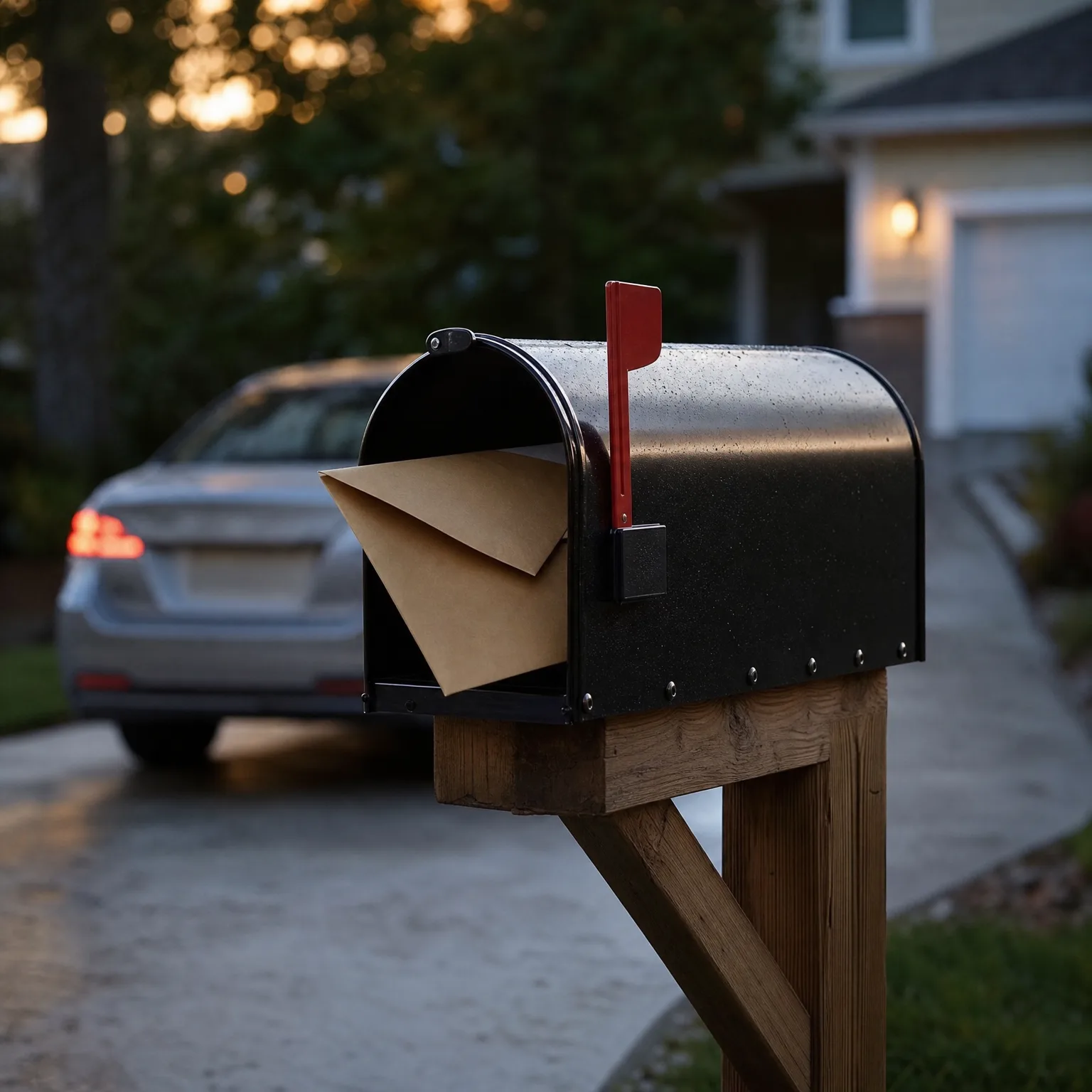
Police in Michigan have real-time access to SOS suspension records through LEIN (Law Enforcement Information Network). If you are stopped for any reason, the officer knows your license status before approaching your window. Claiming you were unaware of the suspension is not a defense. SOS mails suspension notices to the address on your license, and delivery is presumed.
How to Calculate Your Total Cost to Reinstate
Start with unpaid ticket totals across all courts. Call each district court and request your case balance, including late fees and collection costs. Courts cannot waive late fees once a case enters collections, but some judges allow community service substitution for a portion of the principal fine during a payment plan hearing. Add court payment plan setup fees if applicable: Wayne County charges $50, Oakland charges $35, most rural counties charge $25 or waive entirely.
Add SOS reinstatement fee: $125 flat. If you need a restricted license during the debt resolution period, add the $45 application fee. If SR-22 filing is required, add $15–$25/year in insurer filing fees for three years. If you let your no-fault policy lapse during suspension and now face a coverage gap, expect higher premiums when you reinstate: drivers coming off suspension with no continuous coverage pay 30–50% more than drivers who maintained coverage throughout.
If your total debt exceeds $1,000 and you cannot pay in full, prioritize the tickets with bench warrants first. Courts will not negotiate payment plans while an active warrant is outstanding. Resolve warrants through voluntary surrender hearings (most courts schedule these within 48 hours), then negotiate consolidated payment plans for remaining cases.
Where to Find Michigan No-Fault Coverage After Suspension
Not all carriers write policies for drivers with active or recent suspensions. Michigan's post-2020 reform created a tiered PIP system, but it did not expand underwriting flexibility for high-risk drivers. If State Farm or Auto-Owners deny your application, look at non-standard carriers that specialize in post-suspension reinstatement cases.
Progressive, GEICO, and National General write Michigan no-fault policies for drivers with suspension history. Expect quotes in the $190–$280/month range for minimum liability plus $50K PIP if you qualify for the Medicaid-linked low-PIP tier. If you do not qualify and must carry $250K or $500K PIP, monthly premiums typically run $240–$350. These estimates assume no DUI history and a clean record aside from the suspension.
If SR-22 filing is required, ask your agent to confirm the carrier files SR-22 electronically with Michigan SOS. Not all carriers that write Michigan no-fault also handle SR-22 filing, and using separate entities (one for the policy, one for the SR-22 filing service) creates coordination delays during reinstatement. GEICO and Progressive both handle SR-22 filing in-house for Michigan drivers.
Frequently Asked Questions
Do I still owe Driver Responsibility fees if my suspension was issued in 2017?
No. Michigan forgave all outstanding Driver Responsibility Act balances in March 2021. If your suspension originated under DRA, call SOS at 888-767-6424 to confirm your balance is cleared and request removal of the suspension flag. You will still owe the $125 reinstatement fee.
Can I get a restricted license in Michigan if I owe unpaid traffic tickets?
Yes, Michigan allows restricted license applications during unpaid-fines suspensions. You must provide proof of need (employment letter, school enrollment, or medical documentation) and pay the $45 application fee. The restricted license does not eliminate your debt; you must still resolve ticket balances separately.
Does Michigan require SR-22 filing after a suspension for unpaid tickets?
Not typically. SR-22 filing is required after uninsured operation convictions, DUI revocations, and certain other violations. If you were suspended solely for unpaid tickets and did not drive uninsured during the suspension, SR-22 is usually not required. Confirm your status with SOS before purchasing insurance.
How long does Michigan reinstatement take after I pay my tickets?
5–10 business days after the final court submits compliance notification to SOS. Courts do not notify SOS immediately upon payment; each jurisdiction processes compliance reports on different schedules. If multiple courts are involved, the timeline starts when the last court files its notification.
What happens if I drive outside my restricted license routes in Michigan?
Your restricted license is revoked immediately and you return to full suspension. You must reapply for a new restricted license, which SOS often denies on second applications. The revocation is automatic and does not require a hearing.
Can I use an out-of-state insurance policy to reinstate my Michigan license?
No. Michigan requires proof of a Michigan no-fault policy that complies with the state's tiered PIP framework. Out-of-state policies do not meet Michigan's no-fault coverage mandates. Your insurer must file electronic verification with SOS before reinstatement is processed.
Do I need to retake the driver's license exam after a suspension for unpaid tickets in Michigan?
Not typically. Retesting is required for certain medical suspensions, habitual offender revocations, and cases where the suspension lasted multiple years. Unpaid-ticket suspensions do not automatically trigger retest requirements. SOS will notify you if retesting applies to your case.
Related Articles

Michigan License Reinstatement After DRA Fee Clears
5/18/2026

Michigan DRA Rollback & Old Debt: What Still Triggers Suspension
5/18/2026
Michigan DRA Suspension Cost: What You Still Owe Today
5/18/2026

Michigan DRA Debt: Amnesty Path to Reinstatement
5/18/2026
Michigan Restricted License & Unpaid DRA Fees
5/18/2026

Michigan Unpaid Ticket Suspension & Hardship License Path
5/18/2026