
Colorado Hardship Driving Eligibility With Unpaid Court Fines
Get My Reinstatement QuoteDoes Colorado Allow Hardship Driving During Unpaid Court Fines Suspension
Colorado does not grant Early Reinstatement driving privileges while court fines remain unpaid and unresolved. The Colorado Division of Motor Vehicles requires proof that all outstanding court debts are either paid in full or enrolled in a formal payment plan approved by the issuing court before processing any hardship application. This is procedurally distinct from DUI-based suspensions, where Early Reinstatement with an ignition interlock device becomes available immediately upon suspension start.
The confusion arises because Colorado's Early Reinstatement program exists and does accommodate restricted driving, but the gate is payment status, not driving need. If you owe $1,800 across three municipal courts and have made no payment arrangements, your application will be denied at intake regardless of employment documentation. Once you enroll in a payment plan with each court and obtain written confirmation, the DMV treats the debt as resolved for eligibility purposes even though you haven't paid the full amount.
This creates a two-step process most drivers miss: first secure payment plan approval from every court that issued a ticket, then apply for Early Reinstatement. Drivers who submit the DMV application without completing step one waste the $95 reinstatement fee and add weeks to their timeline.

What Colorado Calls Its Hardship License and How the Application Works
Colorado uses the term Early Reinstatement / Probationary License for restricted driving privileges during a suspension period. This is not a separate physical document in most cases: the DMV reinstates your existing license with probationary status and restriction codes visible to law enforcement during traffic stops. The restrictions are printed on a reinstatement notice you must carry while driving.
You apply through the Colorado DMV directly, either at a physical office or through the myDMV online portal for eligible suspension types. Unpaid-fines suspensions require in-person application because the debt resolution documentation must be reviewed manually. The application fee is $95, separate from the base reinstatement fee that will apply when your full suspension period ends. Processing takes approximately 10 to 14 business days once all documentation is submitted and verified.
Required documentation includes proof of SR-22 insurance filing, court-issued payment plan confirmation letters for every unpaid ticket, employer or school verification if work or education is a stated purpose, and ignition interlock device installation certification if any alcohol-related offense appears in your driving history within the past five years. The IID requirement catches drivers by surprise: even if your current suspension is fines-only, a prior DUI or DWAI triggers mandatory interlock under Colorado's persistent drunk driver rules.


How to Identify Total Debt Across Multiple Colorado Courts
Colorado does not maintain a single statewide database of unpaid traffic tickets accessible to the public. Each municipal court, county court, and district court operates independently. If you received tickets in Denver, Aurora, and Jefferson County over three years, you must contact all three court systems separately to obtain balance statements. This fragmentation is the primary reason drivers underestimate their total debt and submit incomplete payment documentation to the DMV.
Start by requesting a copy of your Colorado driving record from the DMV. The record shows convictions and suspension triggers but does not list outstanding balances. Use the conviction dates and issuing jurisdictions as your roadmap. Contact each court's collections or traffic division directly, provide your driver's license number and date of birth, and request a complete itemized balance statement including all fines, fees, surcharges, and collection costs.
Most Colorado courts allow payment plan enrollment for balances above $300. Plans typically require a 10% to 20% down payment and monthly installments over 6 to 12 months. Courts assess a one-time payment plan setup fee ranging from $25 to $50. Once enrolled, request a written confirmation letter on court letterhead stating your account is in good standing under an approved plan. This letter is what the DMV requires, not proof of full payment. Without this document from every court, your Early Reinstatement application will stall.
What Routes and Purposes Colorado Allows Under Early Reinstatement
Colorado restricts Early Reinstatement driving to necessary purposes only: commuting between home and work, attending school or vocational training, driving to medical appointments, participating in court-ordered programs such as DUI education or substance abuse treatment, and traveling to religious services. The DMV defines specific approved destinations at the time of issuance based on the documentation you provide. You cannot use probationary driving privileges for grocery shopping, running errands, or social activities.
Employers must provide a letter on company letterhead stating your work address, scheduled shifts or hours, and confirmation that your job requires personal vehicle use or that public transportation is unavailable. Self-employed drivers must submit additional documentation such as business registration, client appointment schedules, or contracts demonstrating the necessity of driving. Schools require enrollment verification and class schedule documentation. Medical providers must submit appointment schedules for ongoing treatment.
Colorado law enforcement can stop you at any time to verify compliance with route restrictions. If you are pulled over outside approved hours or more than a reasonable distance from an approved destination, your probationary license is subject to immediate revocation and you will face criminal charges for driving under suspension. The state does not issue warnings. One violation ends the program and extends your full suspension period.

Clear the Suspension and Get Covered Again
Get My Reinstatement Quote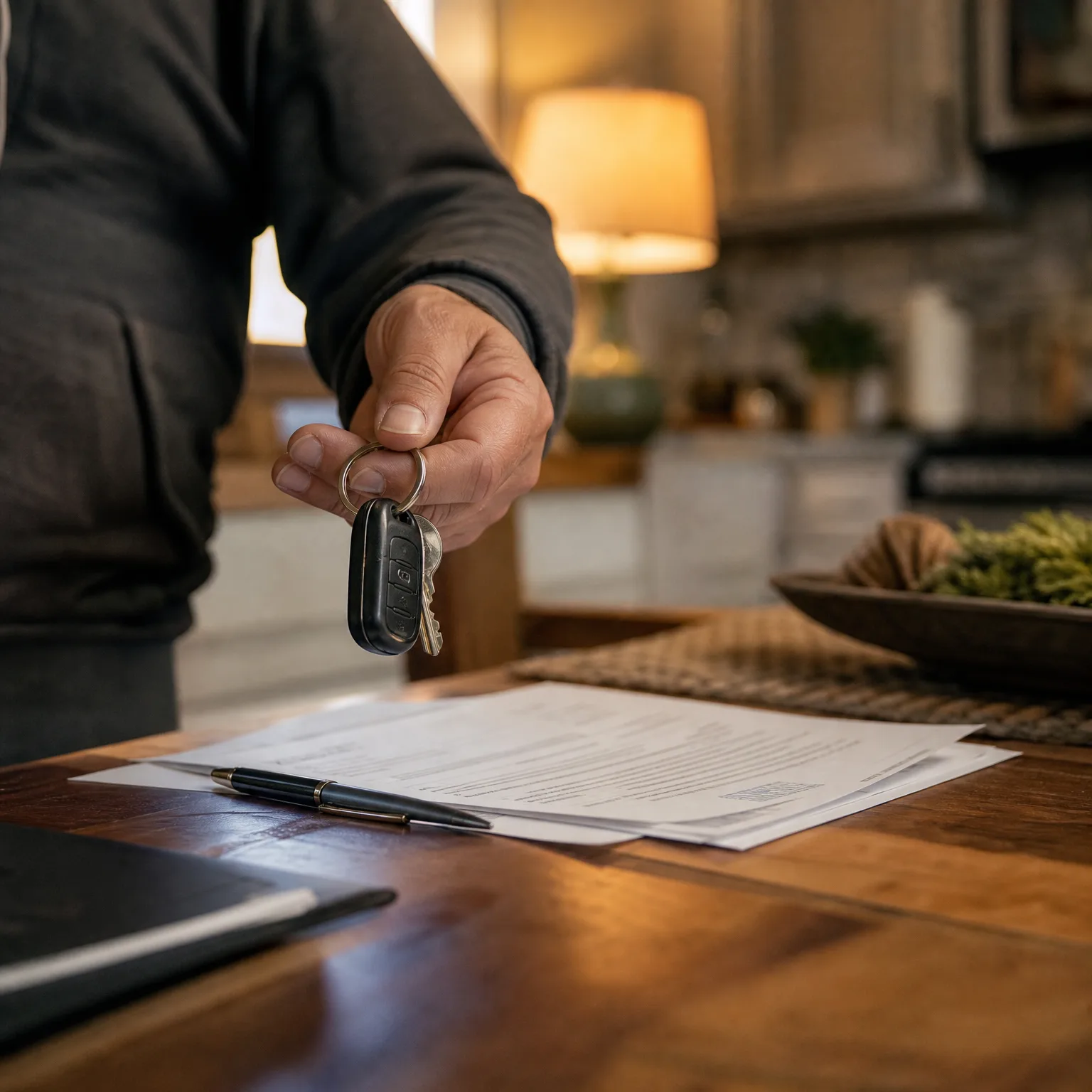
Why Ignition Interlock Shows Up on Fines-Only Suspensions
Colorado designates drivers with two or more alcohol-related offenses as persistent drunk drivers under C.R.S. § 42-2-132.5. Once designated, you must maintain an ignition interlock device on any vehicle you operate for a minimum of two years, regardless of what triggered your current suspension. This means a fines-only suspension in 2024 can still require IID installation if you had a DUI conviction in 2019 and a DWAI in 2021.
The DMV cross-references your driving history during the Early Reinstatement application review. If any alcohol-related conviction appears within the lookback period, the application approval includes a mandatory IID condition even if alcohol played no role in your current suspension. Installation costs range from $75 to $150, monthly monitoring fees run $60 to $90, and removal fees add another $50 to $100. These costs are separate from your court debt and reinstatement fees.
Drivers who skip IID installation because they assume a fines-only case doesn't require it will have their probationary license revoked at first verification check. Colorado requires monthly compliance reports from certified IID vendors. A single missed report or failed startup test triggers automatic suspension and you return to square one with no driving privileges and no refund of application fees.

What Happens When Your Payment Plan Lapses During Probationary Driving
Missing a single payment plan installment to any court while holding Early Reinstatement privileges triggers a notification from that court to the Colorado DMV. The DMV revokes your probationary license administratively without a hearing. You receive a notice by mail stating your driving privileges are canceled effective immediately. From that point forward, any driving is criminal driving under suspension, a misdemeanor carrying up to one year in jail and fines up to $1,000 for a first offense.
Courts do not issue courtesy reminders before reporting a missed payment. The typical reporting lag is 15 to 30 days after the missed due date, which means you may drive legally for two weeks after defaulting before discovering your license is no longer valid. Law enforcement databases update within 24 to 48 hours of DMV revocation. A traffic stop during that window results in arrest, vehicle impoundment, and a new criminal case.
Reinstating probationary privileges after a payment plan default requires bringing all courts current, paying a new $95 application fee, and resubmitting all documentation. Most drivers cannot recover probationary status and instead must complete the full suspension period and pay the standard reinstatement fee. The financial and timeline cost of one missed payment typically exceeds $800 when impound fees, court costs, and lost wages are included.
How SR-22 Insurance Fits Into Fines-Only Suspensions in Colorado
Colorado does not require SR-22 filing for suspensions triggered solely by unpaid court fines. SR-22 is a high-risk insurance certificate mandated for specific violation types: DUI, reckless driving, driving without insurance, accumulating excessive points, and refusing chemical tests. If your suspension letter from the DMV does not explicitly state SR-22 filing is required, you do not need it to reinstate or obtain Early Reinstatement privileges.
However, if you have any alcohol-related offense in your history or were previously suspended for insurance lapse, SR-22 remains active and must stay in force during your fines-only suspension. Letting an existing SR-22 policy lapse during any suspension period triggers a new suspension automatically. The insurance carrier reports the cancellation to the DMV within 24 hours and your license is suspended again even if you resolved the fines-only issue.
SR-22 filers pay approximately $140 to $190 per month for minimum liability coverage in Colorado. Non-standard carriers such as non-standard auto insurance providers dominate this market because traditional carriers decline high-risk applicants. The filing itself costs $15 to $50 as a one-time fee. SR-22 must remain active for three years from the date the DMV requires it, not from the date of conviction. Canceling coverage one day early restarts the three-year clock.
Frequently Asked Questions
Can I get a hardship license in Colorado if I owe court fines but haven't been to court yet
No. Colorado requires either full payment or enrollment in a court-approved payment plan before processing Early Reinstatement applications. If you have unpaid tickets with pending court dates, you must resolve those cases first through payment arrangements or court hearings. The DMV will not accept applications until all issuing courts provide written confirmation of payment plan enrollment or balance satisfaction.
Does Colorado let you set up a payment plan directly with the DMV for reinstatement fees
No. The $95 Early Reinstatement application fee must be paid in full at the time of application. Payment plans are handled separately by the courts that issued the tickets, not by the DMV. The DMV processes restricted driving applications only after you submit proof of court payment plan enrollment, but the reinstatement fee itself is due upfront and cannot be financed.
What happens if I move to another state while on Colorado probationary license for unpaid fines
Your Colorado probationary license does not transfer to another state. You must complete Colorado's reinstatement process and payment obligations before applying for a license in your new state. Most states participate in the Driver License Compact and will see the Colorado suspension on your record. You cannot legally drive in another state using a Colorado probationary license, and your new state will likely deny a license application until Colorado shows full reinstatement.
Can I use Early Reinstatement to drive for Uber or Lyft in Colorado with unpaid fines
No. Rideshare companies require a clean, unrestricted driver's license for all drivers. Colorado's Early Reinstatement probationary license carries restriction codes that disqualify you from commercial driving, rideshare, and delivery work. The restrictions limit you to personal necessary driving only. You must complete full reinstatement and have all restrictions removed before applying to drive for any commercial platform.
How long does Early Reinstatement last if I keep making my court payments on time
Early Reinstatement privileges remain in effect until your original suspension period ends, typically ranging from six months to two years depending on the violation that triggered suspension. Once the suspension period expires and all court debts are paid or payment plans completed, you apply for full unrestricted reinstatement by paying the base reinstatement fee and meeting all other DMV requirements. The probationary period does not reduce your total suspension duration.
Does Colorado require a hearing before granting hardship driving for unpaid fines cases
No. Colorado processes Early Reinstatement applications administratively without a hearing if you meet documentation requirements. You submit proof of payment plan enrollment, SR-22 if required, employer or school verification, and IID installation if applicable. The DMV reviews the file and approves or denies within 10 to 14 business days. Denials can be appealed through the Colorado DMV hearings process, but initial applications do not require you to appear before a judge or hearing officer.
What if one of my Colorado tickets is in collections and the court won't offer a payment plan
Contact the collection agency assigned to the debt and request a payment arrangement directly. Many Colorado courts transfer unpaid tickets to private collection agencies after 90 to 180 days. Collection agencies can negotiate payment plans and provide confirmation letters acceptable to the DMV. If the agency refuses, you may need to pay that specific debt in full while setting up plans for other courts. The DMV requires resolution documentation from every jurisdiction before processing your Early Reinstatement application.
Related Articles
CO Court Payment Plans for Unpaid Tickets by County
5/18/2026
Unpaid Ticket Insurance Colorado
5/29/2026
Colorado Unpaid Fines License Suspension Reinstatement
5/18/2026
Arizona Restricted License With Unpaid Fines Eligibility
5/18/2026
Vermont Hardship Driving With Unpaid Fines: Court Path
5/18/2026
CA Unpaid Ticket Suspension: No Hardship License Path
5/18/2026